

True sharks live only in saltwater, but pet stores sell freshwater fish like the rainbow shark, red tail shark, bala shark, and Chinese high fin banded shark as "freshwater sharks" for their shark-like dorsal fin and body shape. Sizes range from about 6 inches to over 24 inches, so tank size and tank mates need planning first.
Last updated: 29 August 2026
True sharks live in saltwater, but several freshwater fish are sold as "freshwater sharks" for their shark-like fins and body shape, such as the rainbow shark, red tail shark, bala shark, and Chinese high fin banded shark. Sizes range from about 4 inches to species that grow past 24 inches, so tank needs vary widely.
Last updated: 23 August 2026
Freshwater aquarium sharks: a species guide
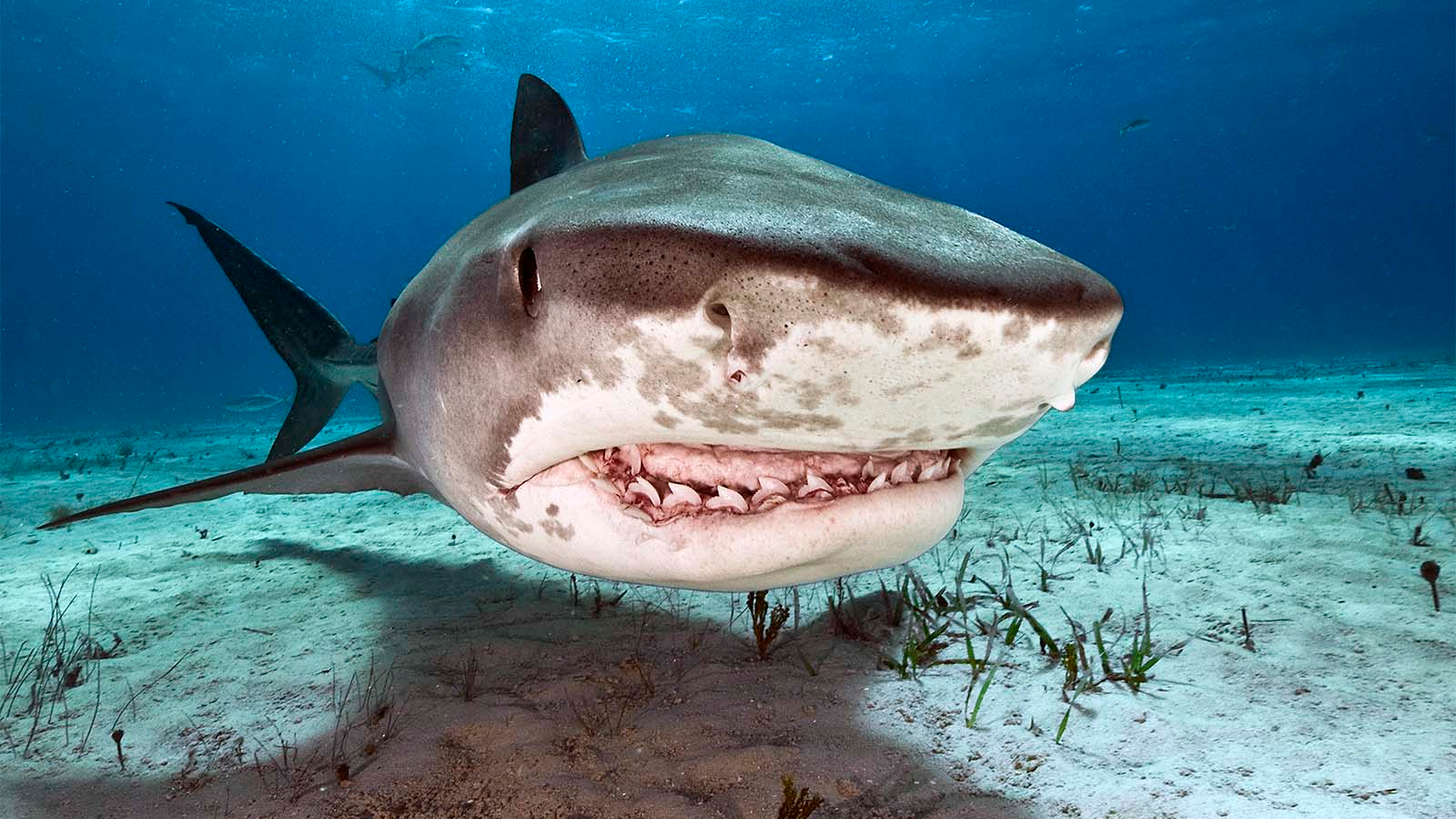
The eye-catching title may sound quite thrilling but we need to dispel any doubts, except for the Bull shark and the river shark species there are no freshwater sharks. Though, above-mentioned are rarely kept in captivity, especially not in the domestic freshwater aquariums.
On the other hand, we have some good news. You can meet and you probably had already met some shark species in a pet store by that time. Perhaps, this is the reason why you are scrolling this page. Is it possible in general to see a fish tank with sharks in it? Well, yes and no.
To be honest, any freshwater aquarium shark is called this name mostly because of their appearance but sometimes they have more in common with sharks that you could expect- things that are not visible at first sight.
The overall looking- a slim body shape, high triangular dorsal fin, big forked tail, resembles their famous toothy marine sharks. They also share some internal qualities- most freshwater aquarium sharks are big and aggressive fish.
What do you need to know before purchasing a freshwater shark?
First of all, there is a wide range of shark species that are available for sale. They are really popular aquarium fish because who would not like to have such a majestic predatory fish? But there is a tiny problem or rather huge...
Many freshwater sharks are sold as very small juveniles and owners make the mistake and introduce them to a freshwater aquarium that is too small. Their size ranges from 4 inches to huge animals that can weigh nearly 100 pounds.
Secondly, it is essential to note that every freshwater shark is a terrible choice for a beginner fish keeper (with some exceptions that will be listed later). Even though, they are tolerant of a wide range water conditions and easy to feed, they are all either dangerous to other fish or just enormous or both. Do you still believe they are called sharks only for commercial reasons?
Provided that you know what you are signing up for, freshwater sharks will likely become a centrepiece of your tank and arouse emotions such as admiration or fear...
Freshwater shark species
Let's have a brief look at freshwater sharks, their characteristic and unique features. If you think about owning a one, this classification will be helpful to choose the shark that suits your needs. Those are types of freshwater aquarium sharks:
Rainbow shark
The rainbow shark is a species of Southeast Asian freshwater fish also known as the ruby shark or, red-finned shark. It has got bright red fins which sometimes may change their coloration into orange as well. It depends on the sex of the rainbow sharks. Males tend to be brighter than females and males also have thin gray lines on their tail fins. Nevertheless, its colorful fins significantly stands out against its grayish bodies.
The rainbow shark is a semi aggressive fish. This means that those fish, if the circumstances are appropriate, may attack other tank mates, especially when their space is threatened because they are highly territorial fish. The adult of the rainbow shark is usually not longer than 6 inches so the tank size should be at least 50+ gallons. To go smaller is simply not fair to them and other fish that you plan to keep in your fish tank. And also the presence of more than 3 rainbow sharks is recommended to diffuse aggression among the group- one rainbow shark will not know which one to choose from the group to assert dominance.
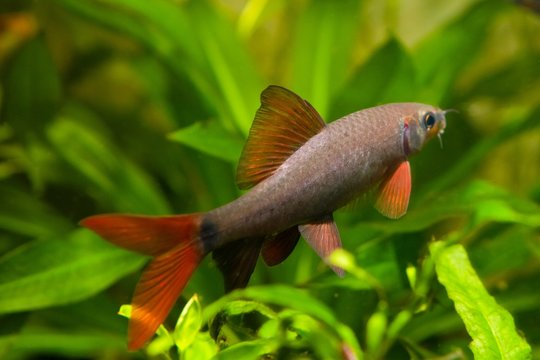
The risk of aggression always exists anytime you place other fish in a tank with rainbow sharks but you may try to introduce your rainbow shark last to the aquarium and it will decrease a chance that the shark will perceive your fish tank as his territory. A lot of plants and rocks is recommended too because other fish will have a place to hide themselves. There is a list of fish that you should definitely avoid putting with rainbow sharks:
-
other sharks like i.g. red tail sharks even if they have similar appearance
-
Cichlids
-
guppies
Instead of that, you may choose dwelling fish near the top of the aquarium or large fish that these sharks will have some respect for:
-
Gouramis
-
Bichirs
-
Angel fish
Rainbow sharks are mostly algae eaters but to keep them healthy you should add a little variety like: frozen bloodworms, brine shrimp or fish, insect larvae.
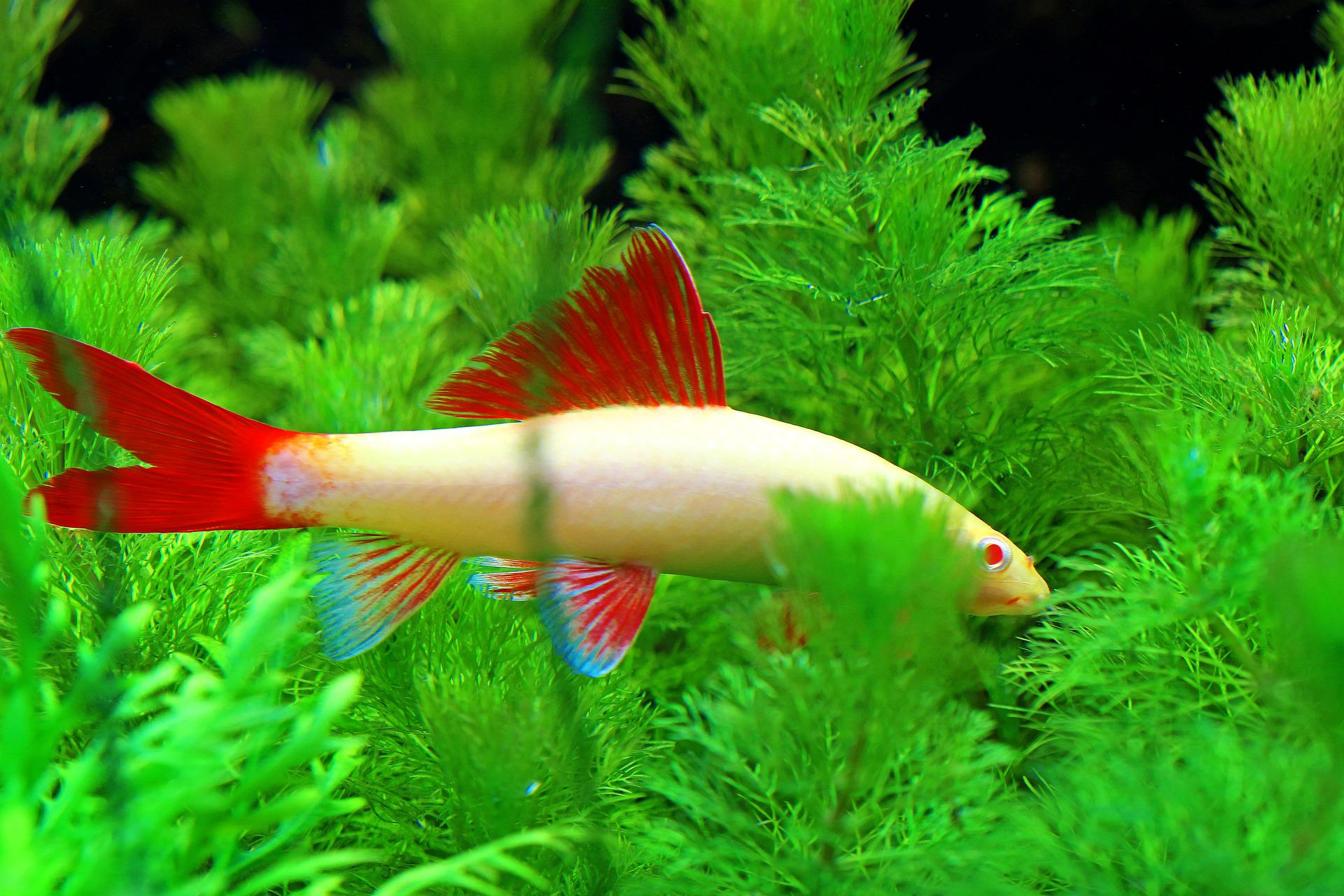
Albino rainbow shark
As the suggests, this is a white version of the regular rainbow shark. They have pretty same behavior as regular ones. They have also red fins and except for the white overall color, they are know for their red eyes.
Chinese high fin banded shark
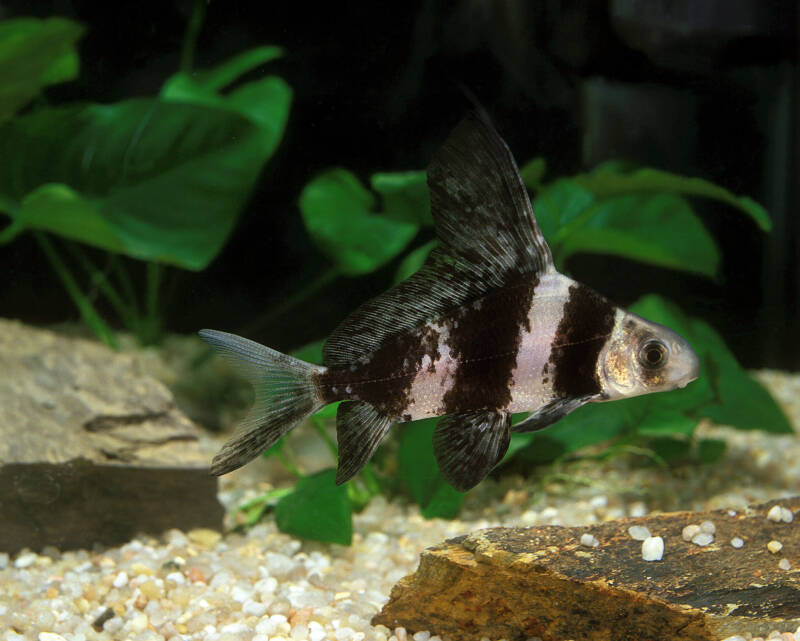
Chinese high fin banded sharks or just chinese high fin sharks are endemic to the Yangtze River basin in... China. It was not hard to guess because this is where its name comes from. In this region they are an important source of food for people. In the aquarium trade, these freshwater sharks are available too but for fish keepers that are not afraid of a challenge.
They have got black and silver stripes when young but when they mature, they change shape and color to red-brown. By the time they reach maturity, they are about 24 inches long. Therefore most aquariums won't be suitable for them and that is not all the Chinese high fin banded shark wanted to say... A fully-grown shark of this kind can reach 4.5 feet in length and weigh about 80 pounds. What a monster!
They need a water tank with some good water flow that is similar to their natural habitat. Almost nobody is able to set up such a large home aquarium but some fish keepers recommend to keep them outdoors with koi fish.
If the size of this shark is not a problem for you, there is next thing to think about- fish waste. If you understand the basics of the nitrogen cycle, you know that such a big fish produces a ton of waste. To keep ammonia and nitrate levels under control, a powerful filtration is required.
In case of its temperament, they are actually really peaceful fish. They usually go well with other fish without any problems, most solid options are i.g.:
-
Dojo fish
-
Hillstream loach
-
most types of goldfish
Red tail shark
These freshwater aquarium sharks are very similar to rainbow sharks but with one, obvious difference. Guess what is unique? Only their tail is red, not fins. These tropical fish are known sometimes as red tail black sharks and the explanation of the meaning is clear. They live up to 8 years and are about 6 inches in lenght.
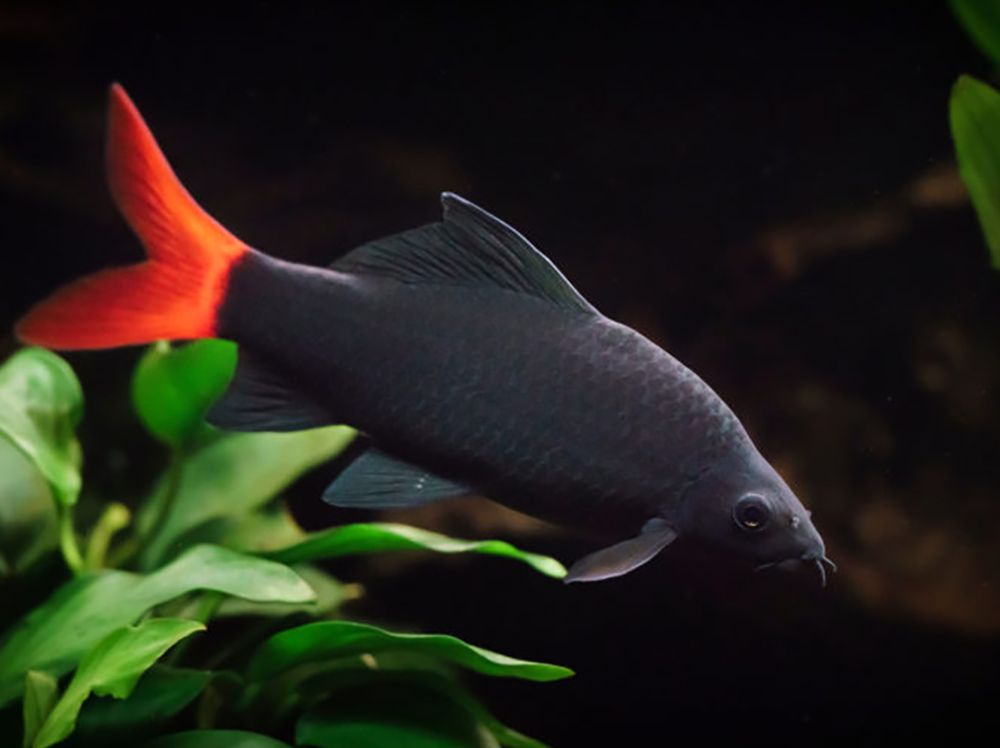
They have got feisty personality. They establish territories and often bully, chase, terrorize other fish. Workable solution for a tank with the red tail shark can be a spacious tank with lots of hiding spots and vegetation. They collaborate well with fast moving or schooling fish that live in middle to upper levels of your aquarium. Good options for a tank with the red tail shark:
-
Barbs- fast moving and travel in groups.
-
Danios
-
Pearl Gouramis
-
Bala sharks
Bala shark
Bala sharks are unfortunate fish because are sold as small, active fish with bright scale and contrasting dark edges to their fins. Their appearance does not change over time but they grow far too big (up to 14 inches) for most freshwater tanks. They show their dissatisfaction by bumping the glass or the cover.
These freshwater aquarium sharks need at least 125 gallons tank and the cover is absolutely essential, because they tend to jump out of the tank to test their skills or when they are scared they look for the exit.
They are not aggressive freshwater sharks and other peaceful community fish will do well with bala sharks companion.
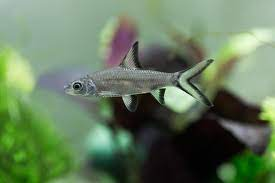
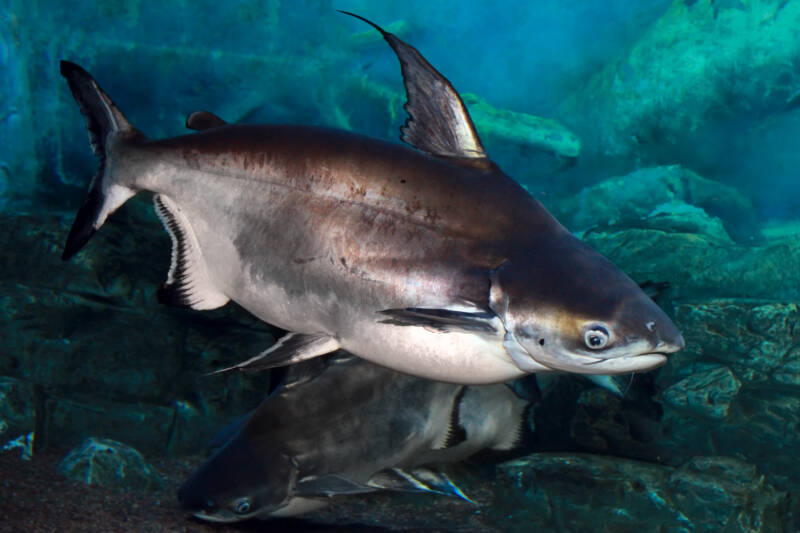
Iridescent shark
Iridescent sharks are really large fish that need really large tank. Although they are even 4 feet long, they are really peaceful sharks but in some cases they will eat tank mates that will be small enough to swallow. As long as you have the space for the iridescent shark, they are a great addition to your tank or pond.
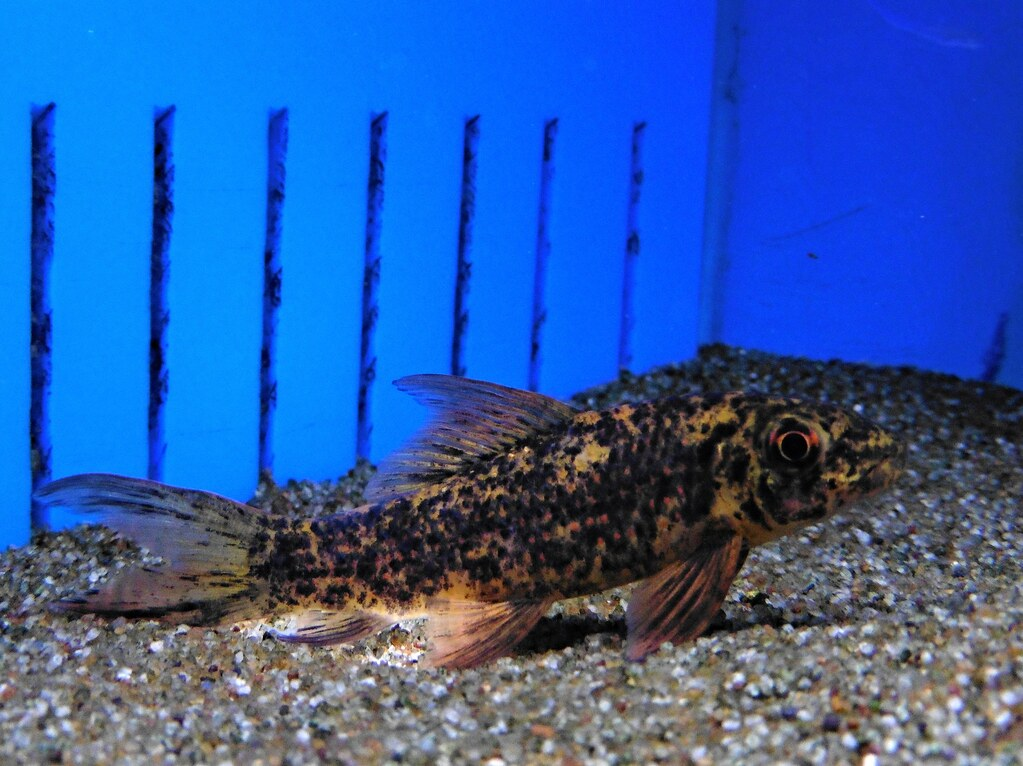
Harlequin shark
Harlequin Sharks are aggressive fish that lead a solitary lifestyle. Harlequin shark will spend the majority of their time hiding but as they grow, they become highly territorial and extremely aggressive. It is expected to most of bottom dwelling species such as Bichirs or catfish to be constantly bullied by the Harlequin shark. Its fins are translucent with black mottling and its body is shaped like the Rainbow shark. They are not commonly met in stores and are really expensive.
Roseline shark
The Roseline shark is probably the most colorful freshwater shark. They have also a funny name- 'the roseline torpedo shark'. They are silver with bold black stripe from nose to tail and bright red markings. These are the example of freshwater aquarium sharks that stay at manageable size. The only problem is that they are social freshwater sharks and need other sharks to be around them. Because they are shoaling fish, make sure to keep at least 5 or 6 roseline sharks together and they will provide happy and healthy life.
Silver apollo shark
This freshwater fish is usually 10 inches long. If we were to describe them in three words, it would be fast, artful and fascinating fish. Although, they are really active, they are rather peaceful to other tank mates with one exception, they should not be too small. In general, your fish should be not less than 8 inches long while kept with silver apollo shark. Their body is divided by a dark line that vertically across their figure. It splits the body in two shades. The upside half is greenish while the lower one is silver. Unfortunately, silver apollo shark is hard to find. It won't happen definitely in a regular pet shop. Instead of that, you should rather visit special tropical fish stores or look for them in the Internet. Be aware because there are two types of apollo sharks. If you buy the long finned apollo shark, the results may be disastrous because of their aggressive behavior.
Large freshwater sharks for aquarium tanks
As you already know most freshwater sharks are species that are only similar to the real ones. They are usually hard to keep in the aquarium because of their enormous size and other conditions that you have to fulfill.
It sounds amazing to have a shark aquarium but we recommend you to begin with something else. Even the most beginner friendly species may be a bit of a challenge. You have to remember that fish species are living creatures and most freshwater sharks are as big as the size of a small aquarium. Moreover, they can live up to 20 years so think twice before getting a one.
Frequently asked questions
Are there freshwater sharks?
Not in the way most people picture. True sharks are marine animals, though a few, like bull sharks, can tolerate freshwater rivers. The fish sold in stores as freshwater aquarium sharks are unrelated species, named for their shark-like dorsal fin and body shape, not their biology.
Is there freshwater sharks you can keep in a home aquarium?
Yes. Species such as the rainbow shark, red tail shark, bala shark, iridescent shark, and roseline shark are commonly sold for freshwater tanks. Many stay territorial or grow large, so tank size and tank mates need planning before purchase, not after.
What are the best freshwater sharks for a beginner aquarium?
Most freshwater sharks are a poor first fish because they are territorial, grow large, or both. The rainbow shark and albino rainbow shark are more manageable at around 6 inches, but still need at least a 50 gallon tank and careful tank mate choices.
How big do large freshwater sharks for aquariums get?
It depends heavily on species. Some, like the rainbow shark, stay near 6 inches. Others, like the Chinese high fin banded shark, can reach roughly 4.5 feet and 80 pounds, which is unsuitable for almost any home aquarium and better suited to outdoor ponds.
Is a freshwater eel a better aquarium alternative to a shark?
Freshwater eels are a different animal group entirely, not a substitute species, but some keepers consider them for a similar centerpiece role. Both eels and freshwater sharks need research into adult size, temperament, and tank requirements before adding either to a planted aquarium.
Most freshwater sharks come from fast-flowing, densely vegetated rivers, and a heavily planted tank gives territorial species like the rainbow or red tail shark more sightlines to break up and more hiding spots for tank mates. Steady CO2 injection helps those plants grow dense enough to serve that purpose instead of thinning out under shark activity. A reliable regulator keeps CO2 levels stable even in the larger, higher-flow tanks these fish need.
Sources
Rainbow shark species profile, SeriouslyFish - https://www.seriouslyfish.com/species/epalzeorhynchos-frenatum
Red tail shark species profile - https://www.seriouslyfish.com/species/epalzeorhynchos-bicolor
Freshwater aquarium shark species compared
| Species | Max size | Min tank size | Temperament |
|---|---|---|---|
| Rainbow shark | 6 inches | 50 gallon | Semi-aggressive |
| Albino rainbow shark | — | — | Semi-aggressive |
| Chinese high fin banded shark | 4.5 feet | — | Peaceful |
| Red tail shark | 6 inches | — | Aggressive |
| Bala shark | 14 inches | 125 gallon | Peaceful |
| Iridescent shark | 4 feet | — | Peaceful |
| Harlequin shark | — | — | Aggressive |
| Roseline shark | — | — | Social |
| Silver apollo shark | 10 inches | — | Peaceful |
Share:
Say hello to Micranthemum Umbrosum!
Bichir fish in the aquarium