

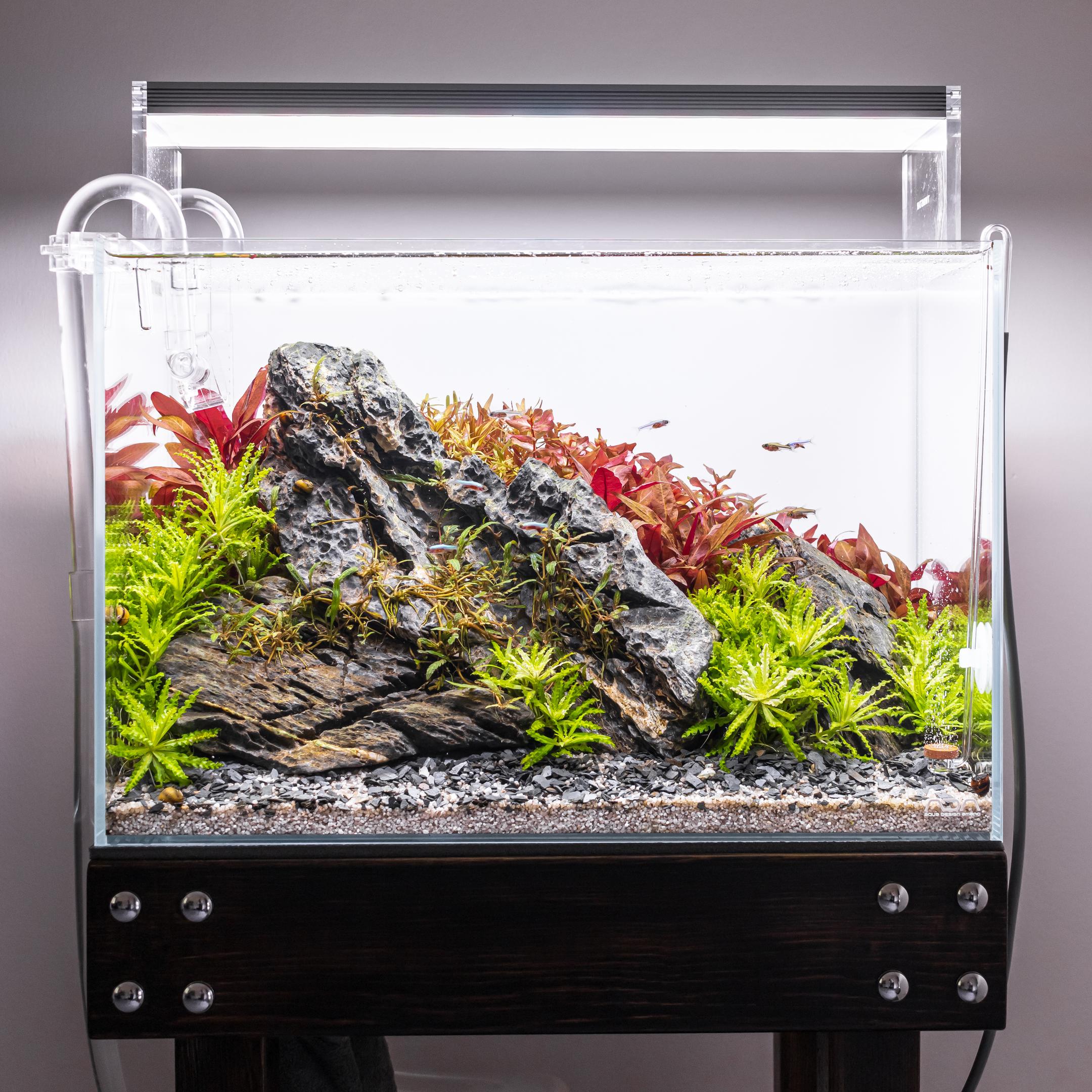
A healthy aquarium depends on much more than clean-looking water. Behind the scenes, countless microorganisms are constantly breaking down waste and helping maintain stable water conditions. Among the most important are beneficial bacteria, which play a central role in processing ammonia, nitrite, and other compounds produced by fish waste and decomposing organic matter.
These bacteria form the foundation of an aquarium’s biological filtration. Without an established bacterial population, toxic ammonia and nitrite can accumulate, putting fish, shrimp, and other aquarium inhabitants at risk. Understanding where beneficial bacteria live, how they develop, and what can damage them is therefore an essential part of maintaining a healthy aquarium.
Beneficial bacteria are also relevant in planted aquariums using CO2 injection. CO2 itself does not normally harm an established biological filter when used correctly, but CO2 levels, oxygen availability, gas exchange, plant growth, and bacterial activity are interconnected. Understanding these relationships can help you maintain both healthy plants and reliable biological filtration.
Key Takeaway: Beneficial bacteria live primarily on surfaces throughout the aquarium, especially filter media and substrate, rather than freely in the water. They help keep the aquarium safe by converting toxic ammonia into nitrite and then nitrate. These microorganisms also depend on oxygenated water, which makes good filtration, circulation, and gas exchange important for a healthy biological filter
What Are Beneficial Bacteria in an Aquarium?
Beneficial bacteria are microorganisms that perform useful biological processes within the aquarium. When aquarists talk about beneficial bacteria aquarium ecosystems rely on, they are usually referring primarily to nitrifying bacteria involved in the nitrogen cycle.
Fish release nitrogenous waste, uneaten food decomposes, and dead plant material breaks down. These processes can produce ammonia, which is highly toxic to aquarium inhabitants.
Beneficial bacteria help process this waste. One group oxidizes ammonia into nitrite, while another oxidizes nitrite into nitrate. Nitrate is considerably less toxic at typical aquarium concentrations and can be removed through water changes or taken up by growing plants.
The term "beneficial bacteria" is broader than nitrifying bacteria alone. An established aquarium contains a complex microbial community involved in breaking down organic material and recycling nutrients. Still, nitrifying microorganisms receive the most attention because of their importance to biological filtration.
Why Beneficial Bacteria Are Essential for a Healthy Aquarium
To understand what is beneficial bacteria and why it matters, it helps to look at what happens in an aquarium without an established biological filter. Ammonia and nitrite can accumulate rapidly, and even when aquarium water appears perfectly clear, these invisible compounds can create dangerous conditions for fish and other livestock.
A mature bacterial population continuously processes waste as it is produced. This is why a cycled aquarium is much more biologically stable than a newly assembled tank.
Beneficial bacteria are particularly important in aquariums with:
High fish stocking levels –
The more fish an aquarium contains, the greater the amount of waste entering the system. Fish continuously produce nitrogenous waste, which contributes to ammonia formation. A well-established population of beneficial bacteria helps process this increased biological load and prevents ammonia and nitrite from reaching harmful concentrations.
Heavy feeding –
Feeding more food does not only mean that fish produce more waste. Uneaten food can settle in the substrate, become trapped in filter media, or collect behind decorations, where it gradually decomposes. This decomposition contributes additional ammonia and increases the workload placed on the aquarium's biological filtration.
Powerful biological filtration –
A good aquarium filter provides much more than mechanical filtration. Biological filter media offer a large surface area where beneficial bacteria can establish colonies. As aquarium water continuously passes through the media, bacteria are supplied with oxygen as well as the ammonia and nitrite they need to process. Good water flow therefore helps the biological filter operate efficiently.
Sensitive fish or shrimp –
Some aquarium inhabitants are less tolerant of poor water quality and sudden changes than others. Ammonia and nitrite can cause problems even when the aquarium looks clean to the eye. Maintaining an established biological filter is especially important when keeping sensitive fish, shrimp, or other livestock that depend on consistently good water conditions.
Fluctuating amounts of organic waste –
The amount of waste in an aquarium is not always constant. Overfeeding, decaying plant leaves, a dead fish or snail, increased stocking, or accumulated debris can suddenly add more organic material to the system. An established microbial community gives the aquarium greater biological capacity to process normal variations in waste, although a major ammonia spike can still overwhelm the biofilter.
Beneficial bacteria do not eliminate the need for maintenance. Water changes, appropriate feeding, filter care, good circulation, and sensible stocking remain important. Instead, biological filtration works alongside these practices, continuously processing nitrogenous waste and helping prevent ammonia and nitrite from accumulating under normal aquarium conditions.
The Nitrogen Cycle: How Aquarium Bacteria Process Waste
Understanding the nitrogen cycle is one of the most important parts of maintaining a healthy aquarium. The beneficial bacteria for aquarium filtration systems are essential to this process because they convert potentially toxic nitrogen compounds into less harmful forms.
In simplified form, the nitrogen cycle looks like this:
Ammonia → Nitrite → Nitrate
Ammonia enters the system through fish waste and the decomposition of organic material, including uneaten food, dead plant matter, and other debris. Because ammonia is toxic to fish and other aquarium inhabitants, allowing it to accumulate can quickly create unsafe water conditions.
In a functioning biofilter, ammonia-oxidizing microorganisms convert ammonia into nitrite. This is an important first step, but nitrite is also toxic and should not be allowed to accumulate in a properly cycled aquarium.
Nitrite-oxidizing microorganisms perform the next stage, converting nitrite into nitrate. Nitrate is considerably less toxic than ammonia or nitrite at typical aquarium concentrations. It can subsequently be removed through regular water changes or consumed by growing aquatic plants as a source of nitrogen.
This explains why a new aquarium cannot always safely support its intended fish population immediately. The microorganisms responsible for nitrification need time and suitable conditions to colonize filter media and other surfaces and develop enough biological capacity to process the waste being produced.
Once the nitrogen cycle is established, the process continues constantly in the background. Fish produce waste, organic material decomposes, and beneficial bacteria continuously process the resulting nitrogen compounds. Maintaining this bacterial population is therefore essential for keeping ammonia and nitrite under control and creating stable conditions for aquarium inhabitants.
Where Do Beneficial Bacteria Live in an Aquarium?
One of the most common misconceptions is that beneficial bacteria primarily live in aquarium water. In reality, most of the microorganisms responsible for biological filtration grow on surfaces throughout the aquarium. Understanding where these colonies establish themselves is also important when learning how to grow beneficial bacteria in aquarium systems effectively.
Beneficial bacteria form biofilms on filter media, substrate, rocks, driftwood, aquarium glass, plant surfaces, and other submerged materials.
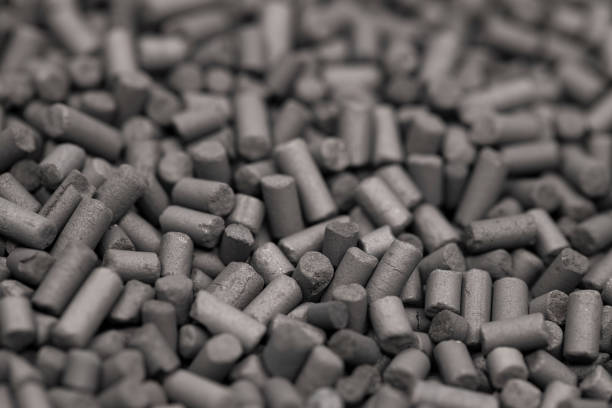
Almost any suitable surface exposed to oxygenated water can become a habitat for microorganisms over time.
The filter is especially important because it combines a large surface area with a continu ous flow of water. Porous biological media can provide extensive habitat for bacteria while the water flowing through the filter continuously supplies them with oxygen, ammonia, and nitrite. This makes the filter one of the most important locations for biological filtration in most aquariums.
The substrate can also support a substantial microbial community, particularly in mature aquariums. Gravel, sand, and other substrate materials provide enormous numbers of small surfaces that bacteria can colonize. Rocks, driftwood, decorations, and healthy plant surfaces provide additional habitat.
This has an important practical consequence: performing a normal water change does not remove most of your beneficial bacteria. Removing 30%, 50%, or even more of the aquarium water does not mean removing the same percentage of the bacterial colony, because relatively little of the biofilter is suspended freely in the water.
The greater risk comes from aggressively cleaning or replacing the surfaces where those bacteria are established—especially filter media. Replacing all biological media at once or thoroughly sterilizing an established filter can remove a significant portion of the aquarium's biological filtration capacity.
If you want to encourage beneficial bacteria, focus on providing plenty of suitable surface area, consistent water flow, adequate oxygen, and stable aquarium conditions. In most cases, there is no need to constantly interfere with the process. Given suitable conditions and a source of nitrogenous waste, microbial colonies will naturally establish themselves on available surfaces throughout the aquarium.
How Long Does It Take Beneficial Bacteria to Establish?
There is no universal number of days required for an aquarium to become fully cycled. Establishing beneficial bacteria for fish tank filtration depends on several factors, including temperature, pH, oxygen availability, filter design, available surface area, the starting bacterial population, and the amount of ammonia available to support bacterial growth.
In a new aquarium, nitrifying microorganisms need time to colonize filter media, substrate, and other submerged surfaces. As ammonia becomes available, ammonia-oxidizing microorganisms begin to establish themselves. Nitrite-oxidizing microorganisms must also develop in sufficient numbers to process the nitrite produced during the first stage of nitrification.
Because these populations develop gradually, cycling should not be judged only by how many days or weeks the aquarium has been running. Two aquariums started on the same day can mature at different rates depending on their conditions.
A better indicator is what happens to ammonia and nitrite. A functioning biological filter should be capable of processing the nitrogenous waste produced by the aquarium without allowing either compound to accumulate to dangerous levels. Testing the water during the cycling process provides a much clearer picture than simply waiting for a predetermined amount of time.
Bottled bacterial products or established filter media from a healthy, mature aquarium may help introduce microorganisms and potentially shorten the cycling process. However, their effectiveness can vary, and water testing is still necessary to determine whether the aquarium is actually ready for its intended bioload.
It is also important to distinguish between a cycled aquarium and a mature aquarium. Completing the initial nitrogen cycle means the aquarium has developed enough biological filtration to process its current waste load. Biological maturation continues much longer as microbial communities become established throughout the filter, substrate, plants, and other surfaces.
For this reason, stability develops with time. A newly cycled aquarium can support biological filtration, but an aquarium that has been running successfully for many months generally contains a more established and diverse microbial ecosystem.
How to Grow and Maintain a Healthy Bacterial Colony
If you are wondering how to get beneficial bacteria in aquarium systems, the good news is that these microorganisms naturally colonize an aquarium when suitable conditions are available. Rather than trying to constantly add bacteria, the main goal should be to provide an environment where an established bacterial colony can grow and remain stable.
A healthy biological filter generally depends on several important factors:
Plenty of surface area-
Beneficial bacteria primarily colonize surfaces rather than living freely in the water. Filter sponges, ceramic media, substrate, rocks, driftwood, plants, and other submerged materials all provide places for microbial biofilms to develop. Porous filter media is particularly useful because it provides a large amount of surface area within a relatively small filter.
Consistent water flow –
Water movement continuously brings ammonia, nitrite, oxygen, and other compounds into contact with the microorganisms living in the filter. If filter media becomes heavily clogged with debris, water may bypass parts of it or flow through it less efficiently. Periodic maintenance that removes excessive debris without sterilizing the media helps maintain effective biological filtration.
Adequate oxygen –
Nitrification is an aerobic process, so the microorganisms responsible for converting ammonia and nitrite depend on oxygen. Good circulation and gas exchange help maintain an oxygen-rich environment for the biological filter. This becomes especially relevant in heavily stocked aquariums and planted tanks using CO2 injection, where balancing CO2 delivery with adequate gas exchange is important.
A source of nitrogen –
Nitrifying microorganisms need a source of ammonia to establish and maintain their population. In an occupied aquarium, fish waste, feeding, and the decomposition of organic matter continuously contribute nitrogen compounds. During fishless cycling, an appropriate ammonia source is typically introduced so the biofilter can develop before livestock is added.
Stable aquarium conditions –
Beneficial bacteria generally perform best when they are not subjected to abrupt environmental changes. Significant shifts in temperature, pH, oxygen availability, or water chemistry can affect microbial activity. Consistency is therefore more valuable than repeatedly making large adjustments in an attempt to create supposedly perfect conditions.
Time to colonize –
Even with suitable filter media and good water conditions, a bacterial colony does not reach full capacity instantly. Microorganisms need time to colonize available surfaces and reproduce. This is why new aquariums should be cycled and monitored rather than immediately subjected to a heavy bioload.
Providing more biological filter media does not automatically create an endlessly increasing bacterial population. The amount of nitrifying activity an aquarium can support is ultimately influenced by available resources, particularly ammonia and oxygen. A lightly stocked aquarium simply does not require the same bacterial capacity as a heavily stocked tank.
The goal, therefore, is not to grow as many bacteria as possible. It is to establish a stable bacterial population capable of processing the aquarium's normal waste load. Providing adequate filtration, oxygen, water movement, suitable surfaces, and consistent conditions allows this microbial community to develop naturally and continue performing its role in the nitrogen cycle.
What Can Kill or Damage Beneficial Bacteria?
Although aquarium beneficial bacteria are resilient enough to survive ordinary aquarium maintenance, certain conditions can damage the biological filter.
Chlorine and chloramine are important examples. Tap water is disinfected specifically because these chemicals affect microorganisms. Filter media therefore should not be unnecessarily exposed to untreated chlorinated water.
Another common problem is replacing too much filter media at once. Disposable cartridges can encourage aquarists to throw away a large portion of their established biological filter simply because the manufacturer recommends replacement.
Mechanical debris can usually be rinsed from reusable media without sterilizing it. The objective is to restore water flow, not make mature filter media look brand new.
Some medications and disinfectants can also affect microbial populations. Their effects depend on the active ingredient and dosage, so treatment instructions should always be considered carefully.
Oxygen deprivation is another potential threat. Because nitrification requires oxygen, a filter that remains without circulation for a prolonged period can become problematic, particularly when it contains large amounts of trapped organic matter.
The general rule is simple: clean the aquarium without trying to sterilize it.
A mature aquarium is supposed to contain microorganisms.
Beneficial Bacteria and CO2 Injection: Is There a Connection?
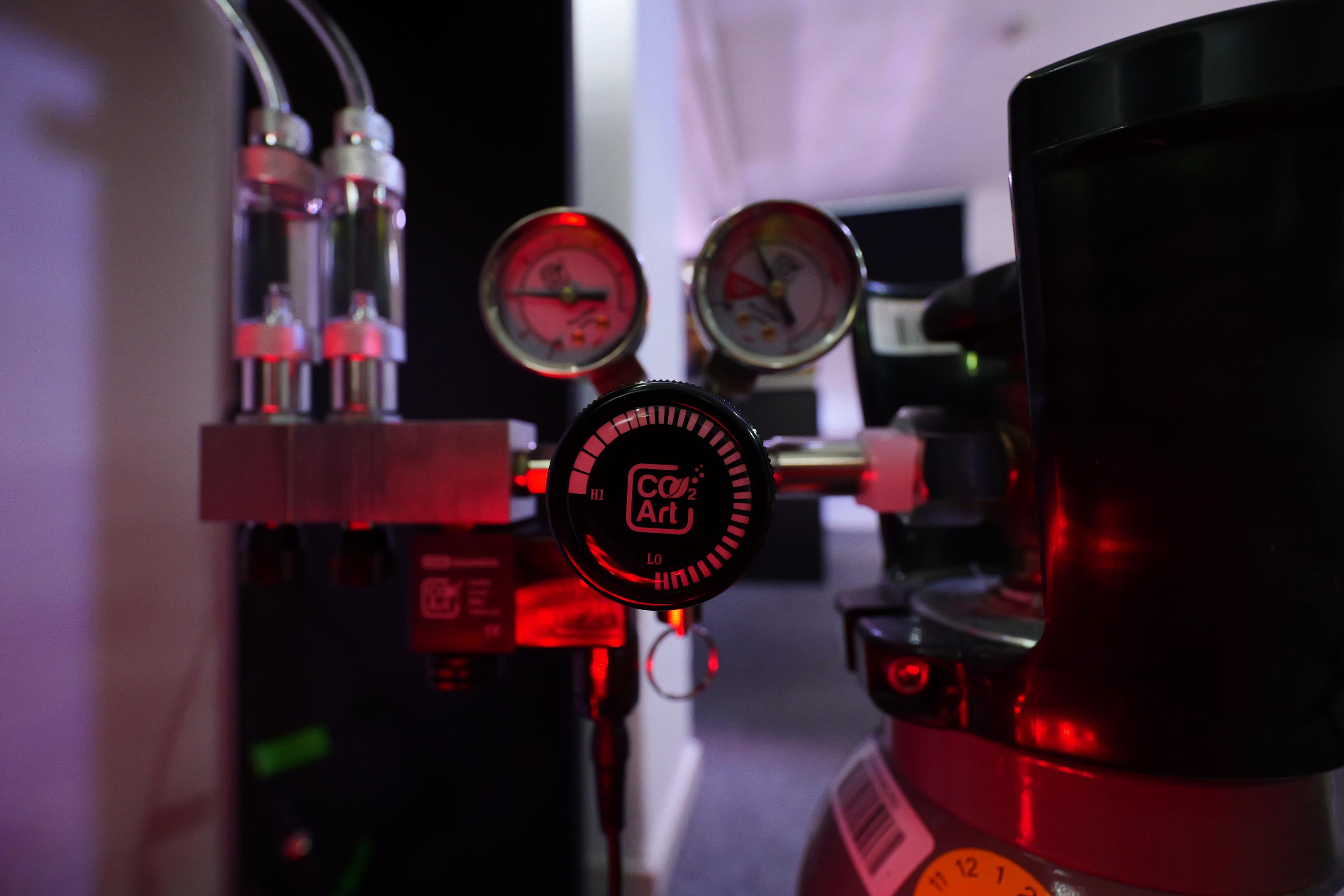
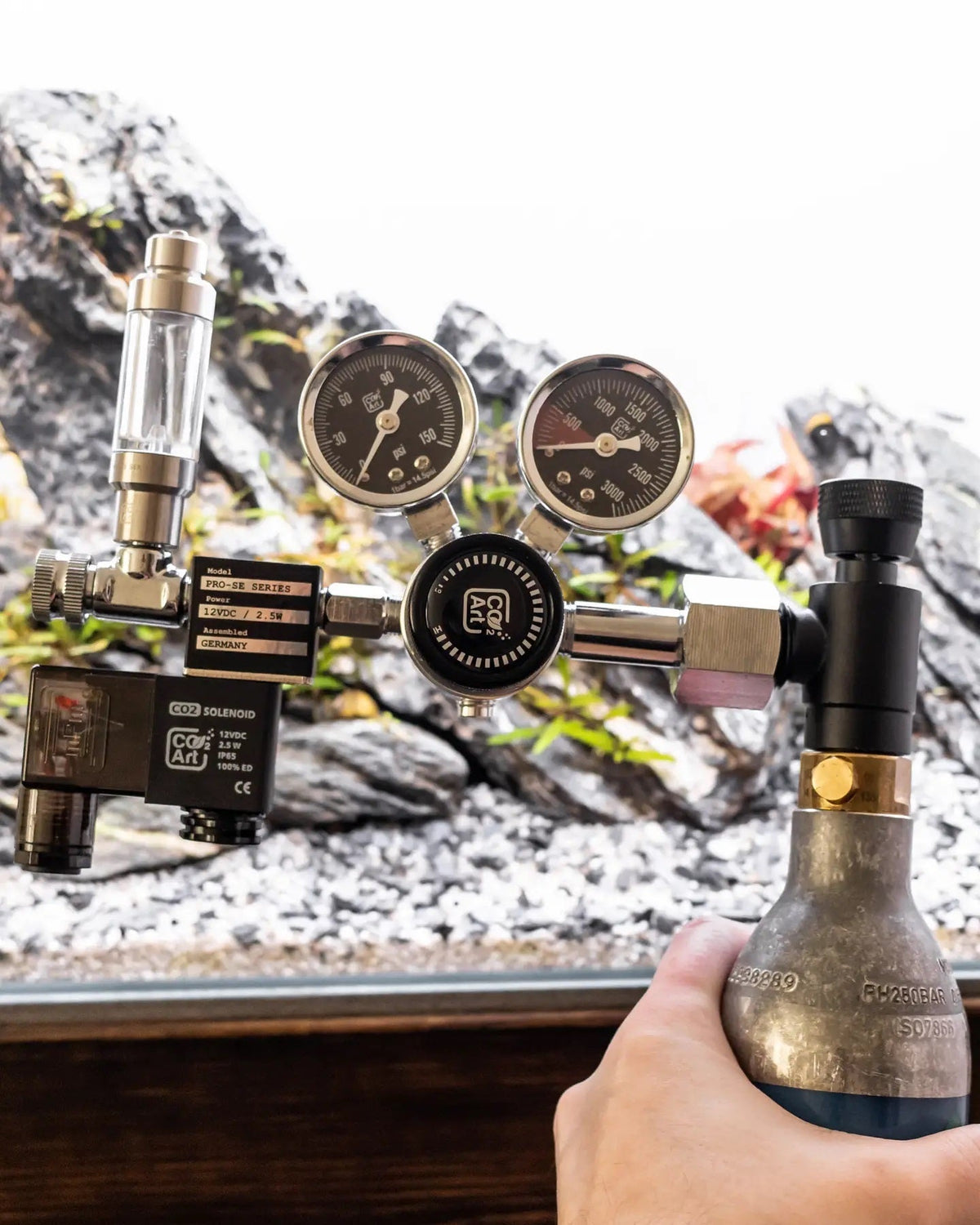
CO2 injection often raises questions about biological filtration. One common concern is whether adding carbon dioxide can kill beneficial bacteria. The nitrifying bacteria for fish tank filtration systems depend on suitable environmental conditions, particularly adequate oxygen, but properly controlled CO2 injection should not normally destroy the biological filter.
The more important relationship is between CO2, oxygen, gas exchange, pH, and respiration.
Nitrifying microorganisms require oxygen. Fish, shrimp, and many other aquarium organisms also consume oxygen. Plants add another layer to the equation.
During the light period, actively growing aquatic plants photosynthesize. With sufficient light, nutrients, and CO2, they can produce substantial amounts of oxygen.
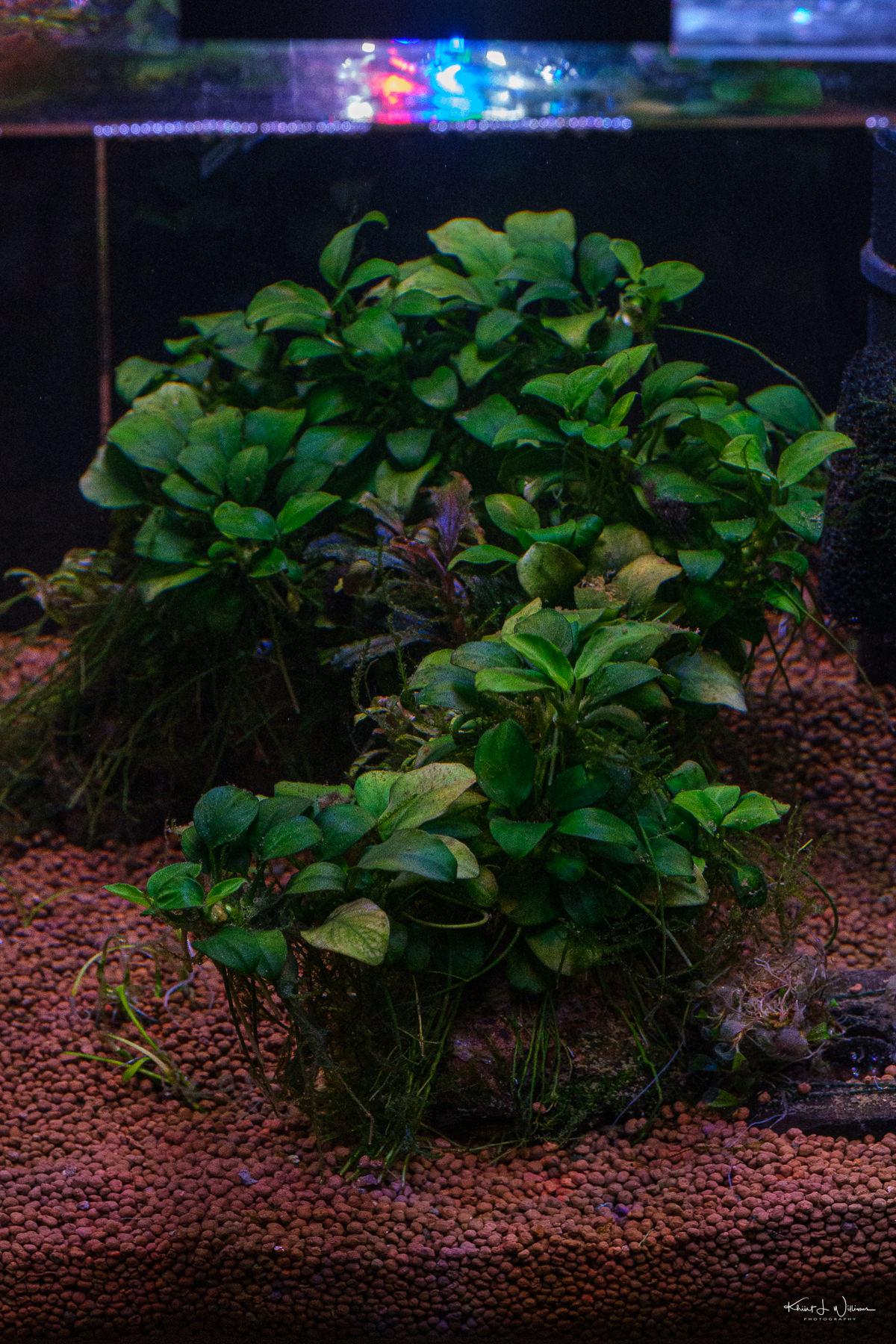
Aquatic plants influence the aquarium's oxygen and carbon dioxide balance through photosynthesis and respiration.
This is why heavily planted CO2-injected aquariums may show visible oxygen bubbles, commonly called pearling.
But plants also respire continuously. When the lights go out, photosynthesis stops while respiration continues. Fish, bacteria, and plants are then all consuming oxygen without photosynthesis replenishing it.
This makes gas exchange and circulation important in a CO2-injected aquarium.
Aquarists sometimes try to eliminate surface movement because surface agitation allows some injected CO2 to escape. Taken too far, however, minimizing gas exchange can work against aquarium stability. The objective should not necessarily be to retain every possible molecule of injected CO2, but to maintain a healthy balance between effective CO2 delivery and adequate gas exchange.
In many planted tanks, good circulation and moderate surface movement can coexist perfectly well with effective CO2 injection. A little additional CO2 consumption may be a worthwhile trade-off for better oxygenation and more stable gas exchange.
Does CO2 Lower pH and Affect Beneficial Bacteria?
Injecting CO2 lowers aquarium pH because dissolved carbon dioxide participates in the carbonate system and increases the concentration of carbonic acid species in the water.
This pH reduction is expected in a CO2-injected planted aquarium.
It is useful, however, to distinguish a CO2-induced pH change from changing the aquarium's mineral or buffering chemistry. A lower pH caused by dissolved CO2 does not necessarily have the same biological implications as creating permanently more acidic water through other means.
Nitrification can nevertheless be influenced by pH, particularly at more extreme values. In a normally operated planted aquarium, the practical focus should therefore be on stable conditions and sensible CO2 levels rather than attempting to keep the pH perfectly constant throughout the day.
Can Too Much CO2 Cause Problems?
Yes, but livestock usually provides a more immediate reason for concern than the bacterial colony.
Excessive CO2 can interfere with normal respiration in fish and shrimp. Poor gas exchange combined with high CO2 and inadequate oxygen can make the situation worse.
Warning signs can include fish breathing rapidly, gathering near the surface, or behaving unusually during the CO2 period.
For this reason, increasing CO2 should never be treated as an unlimited route to better plant growth. A successful planted aquarium needs adequate CO2 and good circulation, gas exchange, oxygen availability, nutrients, and appropriate lighting.
The biological filter benefits from that oxygen-rich environment as well.
Signs Your Biological Filtration Is Working or Failing
A functioning biofilter is surprisingly uneventful. In an established aquarium with an appropriate bioload, ammonia and nitrite should remain at undetectable or negligible levels. While a bacteria starter for aquarium use can help introduce beneficial microorganisms when setting up a new tank, the long-term stability of biological filtration depends on maintaining conditions that allow those microorganisms to establish and function.
Problems become more obvious when biological capacity is disrupted or suddenly overwhelmed.
Possible warning signs include detectable ammonia, detectable nitrite, unexplained livestock distress, or water-quality problems following a major change to the filter.
A biological filter can also be temporarily overwhelmed without being destroyed. Adding many fish at once, dramatically increasing feeding, or allowing a large organism to decompose unnoticed can suddenly produce more waste than the existing microbial population can process.
This is why aquarium stability is partly about avoiding abrupt changes in bioload.
When ammonia or nitrite appears in an established aquarium, consider what recently changed. Was filter media replaced? Was the filter switched off for an extended period? Was medication used? Were many new fish added? Has something died or begun decomposing?
Finding the cause is more useful than simply adding another bacterial product and hoping the problem disappears.
Final Thoughts on Beneficial Bacteria in Aquariums
Share:
Brief Guide on CO2 Injection in Planted Aquarium
How to Properly Grow Aquarium Plants